

Posted At: Aug 23, 2026 - 94 Views
Commercial Meat Grinders & Mincers Buying Guide
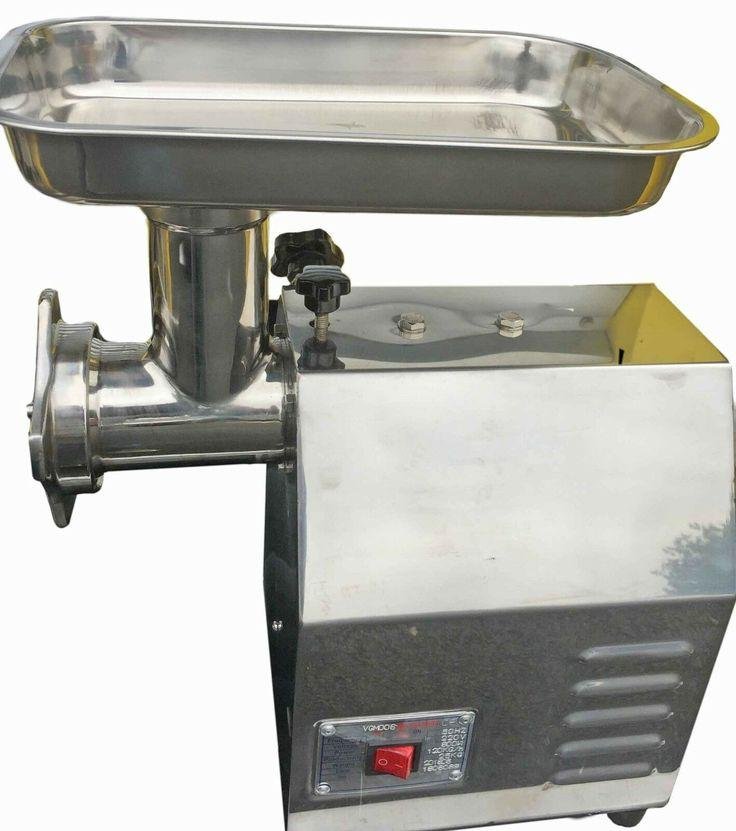
Commercial meat grinders and mincers are critical prep machinery for butcher shops, burger outlets, kebab restaurants, and central production kitchens. Grinding meat in-house allows chefs and butchers to control lean-to-fat ratios, ensure food freshness, and enforce strict sanitation standards. High-performance mincers rely on heavy-duty motors, precision-ground stainless steel knives, and cold-grinding mechanics that process meat rapidly without generating friction heat that alters meat texture.
Technical Features of Commercial Meat Mincers
Internal drive gearboxes and cutting system assemblies define a mincer's hourly throughput and durability.
Heavy-Duty Gearbox & Motor Horsepower
Commercial mincers incorporate high-torque induction motors (ranging from 1.5 HP to over 5 HP) coupled with precision steel gear drives. This construction enables the machine to process chilled meat cuts and tough connective tissue smoothly without stalling.
Stainless Steel Cutting Plates & Blades
Grinding head components—including the worm gear, knifed blades, and hole plates—are precision-cast from food-grade AISI 304 stainless steel. Perforated plate hole sizes range from fine 3mm openings for sausages to coarse 8mm+ openings for gourmet burger blends.
Comparison: Standard Manual-Feed Mincers vs Mixer-Grinders
| Feature / Criteria | Standard Commercial Mincers | Automatic Mixer-Grinders |
|---|---|---|
| Operational Method | Manual feeding of meat chunks via top tray | Integrated paddle mixes meat and spices before automated grinding |
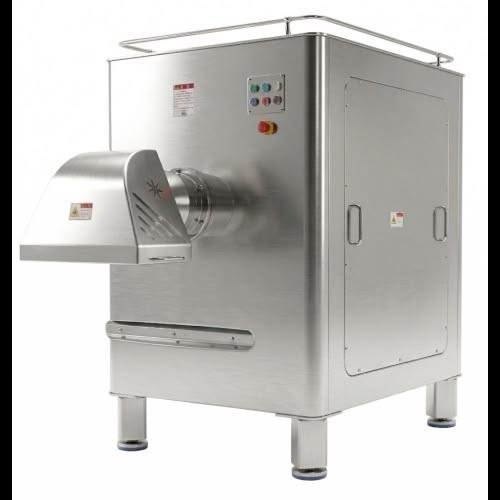
| Hourly Capacity | High throughput (150 kg to 300 kg/hour) | Mass production throughput (500 kg to 1000+ kg/hour) |
| Seasoning Integration | Requires manual hand-mixing of spices post-grind | Blends seasonings and fat ratios uniformly inside the hopper |
| Best Application | Restaurants, specialty delis, and local butcher shops | Central commissaries, meat processing plants, and hypermarkets |
Selection Criteria and Mincer Maintenance
Strict cleaning routines and head sizing protect meat quality and prevent bacterial growth.
Selecting Proper Grinding Head Sizes
Choose head sizing according to daily processing volume. Size #12 and #22 heads fit medium-volume restaurant kitchens, whereas heavy-duty #32 and #52 heads are essential for high-volume processing facilities.
Daily Head Disassembly and Chilling Practices
Disassemble the tray, feed screw, cutting blades, and hole plates daily for chemical sanitization. Chill grinding head components in a walk-in cooler prior to grinding to ensure clean, precise meat cuts without tearing.