

Posted At: Oct 25, 2026 - 1 Views
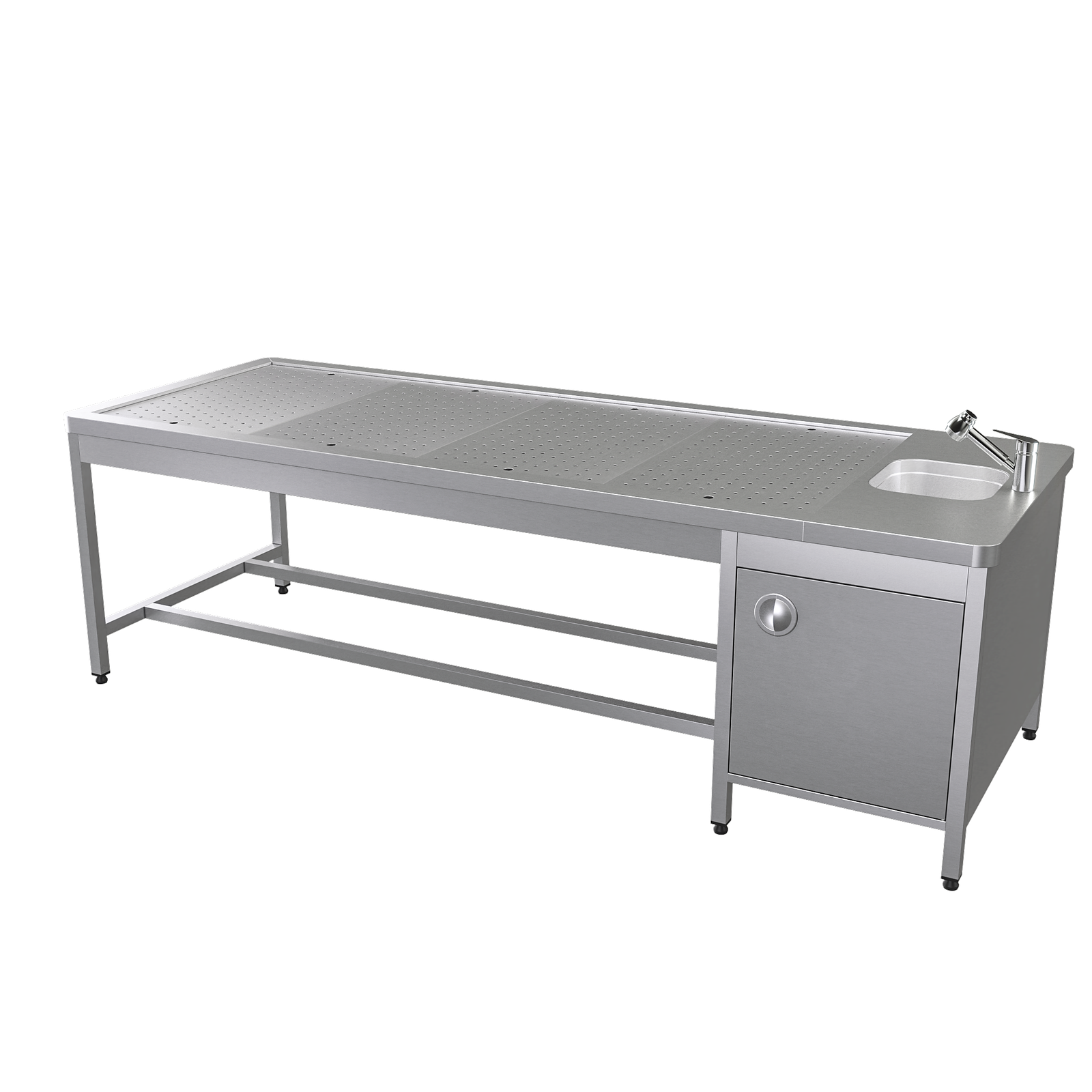
1. Hydraulic & Metallurgical Challenges in Commercial Seafood & Poultry Preparation
Within modern hypermarkets, central fresh-protein commissaries, industrial packaging hubs, and hotel banquet processing facilities, the raw fish and poultry preparation line represents the most complex hydraulic and sanitary engineering environment in back-of-house operations. Daily prep cycles involve handling hundreds of kilograms of fresh marine fish, shellfish, crustacea, and raw whole poultry. Processing these raw proteins presents severe operational liabilities: managing high-volume fluid run-off, suppressing pungent organic odors, preventing lethal bacterial cross-contamination (such as Salmonella enterica, Campylobacter jejuni, and Vibrio parahaemolyticus), and resisting pitting corrosion caused by continuous contact with saline seawater, blood proteins, and harsh chemical sanitizers.
Deploying generic commercial worktables or non-specialized prep stations in seafood and poultry lines introduces catastrophic structural and operational vulnerabilities. Standard tables constructed from low-grade stainless steels (such as 201 or 430 series) deteriorate rapidly when exposed to marine salt and acidic chicken marinades, resulting in pinhole corrosion, surface pitting, and structural rust. Furthermore, basic worktables lacking sloped drainage channels, ice-slurry sinks, and waste filtration traps allow fish scales, poultry viscera, and blood to pool on work surfaces. Fluid run-off spills directly onto kitchen floors, creating hazardous slip conditions for staff, emitting foul decomposition odors, and clogging main facility drainage pipes with fat and solid tissue waste.
To solve these hydraulic challenges, maintain strict cold-chain integrity, and meet global HACCP and health authority standards, EgyAtyalya (egyaytalya.com) supplies VITAL Advanced Fish & Poultry Processing & Cutting Stations. Engineered from acid- and salt-resistant AISI 304 stainless steel and featuring integrated ice-wash sinks, scale traps, and color-coded HDPE cutting surfaces, VITAL prep stations set the benchmark for commercial protein preparation infrastructure.
2. Metallurgy & Materials Science: AISI 304 Stainless Steel & Color-Coded HDPE Boards
The exceptional durability, corrosion immunity, and sanitary safety of the VITAL Fish & Poultry Processing Station rely on certified metallurgical selection and NSF-approved polymer engineering:
A. Salt- and Acid-Resistant AISI 304 Stainless Steel Chassis Construction
The main chassis, sink basins, drainage channels, and lower storage frame are constructed entirely from heavy-gauge AISI 304 austenitic stainless steel, engineered with an optimal chemical composition of 18% chromium and 8% nickel. Key metallurgical characteristics include:
Pitting & Chloride Corrosion Immunity: The high chromium-nickel matrix forms an imperceptible, self-healing chromium oxide passive layer across all steel surfaces. This layer provides complete immunity against marine salt, sea moisture, blood proteins, acidic marinades, and harsh chlorine-based sanitizers.
Heavy-Duty Structural Stability: Built using 40×40 mm AISI 304 box-section stainless steel legs with a wall thickness of 1.5 mm and cross-braced sub-frames, the structure withstands heavy manual cleaver chops and large fish crates without structural swaying or metal fatigue.
Continuous TIG Welded Geometry: All structural joints undergo continuous Tungsten Inert Gas (TIG) welding, ground smooth and polished to eliminate micro-crevices or rough seams where bacteria or fish scales could adhere.
B. NSF-Certified Color-Coded High-Density Polyethylene (HDPE) Boards
Positioned directly above the main processing zone are heavy-duty, removable HDPE cutting slabs coded by color in accordance with international food safety standards:
Blue HDPE Slabs: Exclusively dedicated to fish, shellfish, and seafood preparation.
Yellow HDPE Slabs: Exclusively dedicated to raw poultry, chicken, and turkey preparation.
These color-coded slabs eliminate cross-contamination between raw poultry pathogens and fresh seafood. The non-porous density of the HDPE material prevents blood and fish oils from soaking into the board, while its knife-friendly yield strength absorbs cleaver impacts without dulling razor-sharp boning knives.
3. Hydraulic Engineering: Integrated Ice-Wash Sinks, Sloped Channels & Scale Traps
The defining engineering feature of the VITAL Processing Station is its unified liquid and solid waste management framework:
A. Integrated Deep-Drawn Ice-Wash Sinks with Perforated Inserts
Integrated into the prep station is a deep-drawn AISI 304 stainless steel sink basin featuring a removable, perforated stainless steel false bottom insert:
Cold-Chain Ice-Slurry Preservation: Fish and poultry can be placed over crushed ice inside the sink basin for washing and gutting. Melted ice water drains continuously through the perforated false bottom into the drain below, preventing fresh seafood from soaking in standing, stagnant water. This maintains firm muscle tissue and extends shelf life.
Seamless Hydraulic Pressing: The sink basin is pressed from a single sheet of stainless steel with smooth 25 mm radius internal corners, eliminating sharp welded joints that accumulate slime or bacteria.
B. Sloped Surface Channels & Scale Trap Waste Strainers
Sloped Fluid Run-Off Channels: The stainless steel tabletop features engineered fluid slopes that direct blood, wash water, and fish slime toward the drain outlet, keeping the working surface clear of standing liquid.
Removable Fish Scale & Scrap Basket Strainers: The main drain outlet is equipped with a heavy-duty, removable stainless steel mesh basket strainer. This trap catches fish scales, poultry viscera, skin trimmings, and bone fragments before they enter facility plumbing, preventing costly drain clogs and pipe blockages.
4. Operational Advantages for Hypermarkets & Fresh Food Commissaries
Deploying VITAL Fish & Poultry Processing Stations from EgyAtyalya (egyaytalya.com) delivers significant operational, economic, and sanitary benefits:
A. Strict HACCP Compliance & Pathogen Isolation
HACCP food safety protocols require absolute separation between seafood and poultry prep lines to prevent pathogen transfer. By using dedicated VITAL stations with color-coded HDPE boards, facility managers enforce visual hygiene discipline, allowing sanitation crews to perform rapid swab tests with zero residual bacterial counts.
B. Streamlined Prep Ergonomics & Throughput Growth
By integrating descaling, gutting, washing, portioning, and scrap disposal into a single ergonomic footprint, operator fatigue is minimized. Prep staff can clean and filet fish or break down poultry carcasses up to 50% faster during peak retail hours.
5. Technical Comparison: Generic Prep Tables vs. VITAL Processing Stations
Technical & Operational Criteria | Generic Commercial Worktables | VITAL Fish & Poultry Processing Station (EgyAtyalya) |
|---|---|---|
Metallurgical Standard | 201/430 grade steel; rusts in saltwater | Certified AISI 304 food-grade 18/8 stainless steel |
Cross-Contamination Protection | Single white board; high pathogen risk | Color-coded HDPE slabs (Blue for Fish / Yellow for Poultry) |
Washing & Ice Slurry Integration | Flat surface; requires separate sink | Integrated deep-drawn sink with perforated false bottom |
Plumbing & Scale Management | Open drain hole; causes pipe clogs | Removable stainless steel scale trap strainer basket |
Surface Fluid Hydraulics | Flat surface allows blood pooling | Sloped channels direct fluid run-off to drain |
Cleaver Shock Absorption | Thin steel dents under heavy chops | Shock-absorbing HDPE board & reinforced 40x40 frame |
6. Preventive Maintenance, Sanitation & Algorithmic Care Protocols
To maintain the corrosion resistance of AISI 304 stainless steel, extend the life of color-coded HDPE boards, and preserve a clean, odor-free work environment, facility maintenance teams should enforce the following care protocols:
Immediate Post-Shift Scale Basket Clearing: Empty and sanitize the stainless steel scale trap basket at the end of every prep shift to eliminate organic waste and prevent foul odors.
Thermal & Alkaline Washdown: Wash the stainless steel chassis and HDPE boards daily with warm water (60°C) and an approved alkaline, fat-dissolving detergent to remove fish oils and poultry grease.
HDPE Board Sanitization & Chemical Soaking: Remove color-coded HDPE boards daily and submerge them in an approved sanitizing bath (quaternary ammonium or chlorine solution) before air-drying vertically.
Monthly Adjustable Feet & Plumbing Audits: Inspect the stainless steel bullet feet and drain connections monthly to ensure the station remains perfectly level for optimal fluid drainage into facility waste outlets.